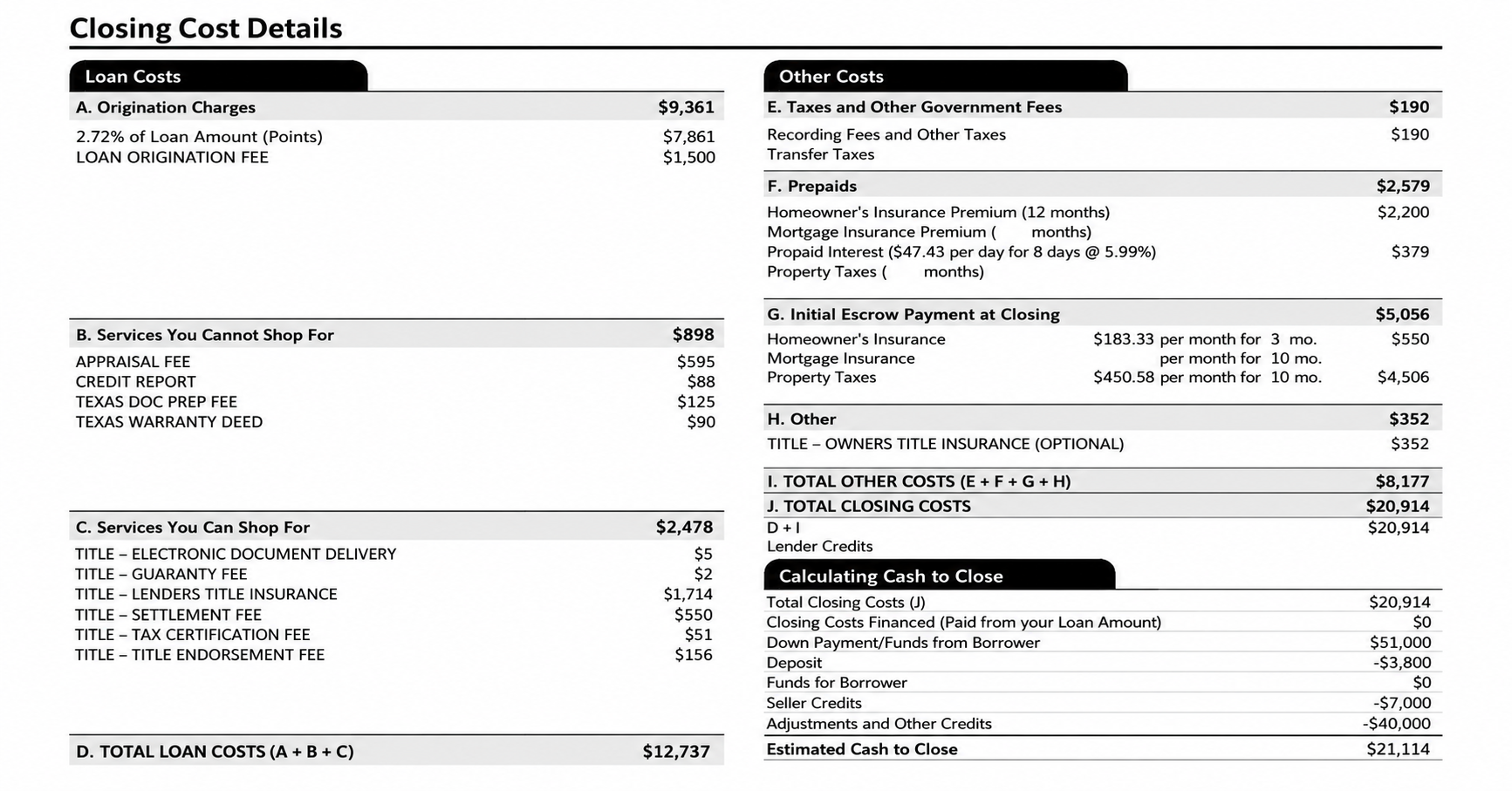
This is hands down one of the most common questions I get: "I already signed the Loan Estimate" — or "I already locked my rate" — "so I'm stuck with this lender now, right?"
No. You're not. And it's worth understanding why, because a lot of people end up staying in a bad loan out of a belief that they've somehow signed away their options. They haven't. Here's what those steps actually mean, when you can switch, and the one real thing that governs whether it's practical: time.
Signing the Loan Estimate Doesn't Commit You to Anything
Let's clear up the biggest myth first. When you get a Loan Estimate and you sign it — or click "intent to proceed" — you are not signing a contract that binds you to that lender. All that signature does is acknowledge that you received the document and want to keep moving forward so the lender can start working on your file.
It is not a loan agreement. It's not a commitment to close with them. It doesn't obligate you to a single dollar. You are free to walk to another lender at any point up until you sign your final closing documents at the closing table. That's the actual point of no return — not the Loan Estimate.
If you're not sure how to read the Loan Estimate you're holding in the first place, I broke that down step by step here: how to read a Loan Estimate, line by line.
Locking Your Rate Doesn't Trap You Either
This one confuses even more people, because it feels like a commitment. It isn't — at least not from your side.
A rate lock is the lender's commitment to you. It's them promising to hold a specific rate for a set number of days so you're protected if the market moves against you before closing. It is not you promising to use them. If you find a better deal elsewhere, the locked rate doesn't chain you in place — you can leave, and the lock simply goes away with the lender you left.
The only thing you might lose by leaving is any fee you already paid that lender for something they've done — an application fee, or the appraisal (more on that below). You're not penalized for "breaking" a lock in the way people fear.
Not happy with your current lender but already deep in the process?
It's often not too late to switch and still close on time. Send me your Loan Estimate and I'll tell you honestly whether it's worth moving — free, no pressure.
Book a free Loan Estimate review →The Real Constraint Isn't Permission — It's Time
So if you're allowed to switch whenever you want, what actually stops people? One thing: the clock.
When you're under contract to buy a home, you have a closing date, and that date is a real deadline. Switching lenders means the new lender has to underwrite your loan, order or transfer the appraisal, and get you to the closing table — all before your contract's closing date. The question is never "am I allowed to switch?" It's "is there enough time for a new lender to close me on schedule?"
If you catch a problem early — say you're a couple weeks into a 30- or 45-day process — there's usually plenty of runway to move. If you're three days from closing, it's much tighter, though not always impossible. And there's a release valve people forget about: you can often get an extension. If a switch would benefit you but you need a few extra days, your agent can usually negotiate a short closing extension with the seller, especially if the reason is sound. Sellers generally prefer a brief delay over a blown-up deal.
So the honest framing is: switching is almost always allowed, and it's usually practical too — as long as you act with enough runway or can get the closing date moved. The cleanest time to switch is before the appraisal is ordered, since that removes the transfer question entirely. But — and this matters — don't let the appraisal already being done stop you. If you're seeing real red flags or you're just not comfortable with your lender, an already-completed appraisal is a hurdle to manage, not a reason to stay in a loan that isn't right for you.
What Happens to the Appraisal?
This is the part that genuinely trips people up, and the answer depends on your loan type.
FHA loans — usually transferable. Here's a detail most borrowers don't know: an FHA appraisal is tied to your FHA case number, not to the lender. Because FHA (through HUD) essentially owns that appraisal, it can move with you. In fact, FHA rules require your old lender to transfer the appraisal to your new lender, at your request, within five business days. The case number transfer itself typically takes about 48 hours. FHA appraisals are valid for 120 days, so as long as you're within that window and you've paid for it, you can usually carry it to the new lender and avoid paying for a second one.
Conventional loans — sometimes, with two common snags. Conventional appraisals aren't tied to a government case number, so transfers happen lender-to-lender rather than through a central system. They can absolutely transfer, but two things get in the way. First, the old lender has to cooperate — and a lender who's annoyed you're leaving can drag their feet on releasing it. Second, even when they do release it, your new lender has to have that specific appraiser approved in their database. If they don't, the appraisal can't be used and a new one gets ordered. Neither is a dealbreaker, but they're why conventional transfers are less of a sure thing than FHA.
One more scenario that catches people: switching from FHA to conventional (or vice versa). If you were set up as an FHA loan but want to move to conventional — or the reverse — the appraisal has to be converted to the other type, and that isn't always doable. Sometimes it converts fine; sometimes it takes longer, and sometimes it means a fresh appraisal. If you're changing loan type and not just lender, factor in that extra step.
The honest caveat on all of it: "usually transferable" is not "guaranteed." FHA is the smoother case because the case number and appraisal live in the FHA Connection portal, so the handoff is cleaner. Even so, a few things can force a new appraisal — an old lender dragging their feet, an appraisal close to its 120-day expiration, an appraiser your new lender doesn't have approved, or a loan-type conversion that won't carry over. A good loan officer checks all of this before you switch, so you know upfront whether you're looking at a clean transfer or a re-order. You shouldn't have to guess — you should be told.
When Is It Actually Worth Switching?
Being allowed to switch doesn't always mean you should. It's worth it when the numbers or the service justify the effort:
- The pricing is genuinely better — a lower rate, or meaningfully lower origination charges (Section A on your Loan Estimate) that save you real money over the life of the loan.
- Your current lender is failing you — missed deadlines, no communication, or a file that keeps stalling. If your loan is at risk of not closing on time with your current lender, switching can actually be the safer move, not the riskier one.
- Something changed and they can't handle it — your original lender can't do the program you now need, or hit a wall with your income or the property.
Beyond those, here are the specific red flags I tell people to watch for — the ones that should make you stop and get a second opinion:
- They're steering you into FHA when your credit is strong. If you've got a good credit score and solid profile but your lender put you in an FHA loan without a real conversation about why, that's worth questioning. FHA is the right tool for some borrowers, but with strong credit a conventional loan is often cheaper — and steering you to FHA without explaining the tradeoff is a flag.
- Big Section A charges you never discussed. If your Loan Estimate shows a rate that looks fine but Section A is loaded with origination charges — and nobody ever talked to you about paying points to buy that rate down — that's a conversation that should have happened before, not something you discover on the document.
- Their rate is just way off. If you get a quote elsewhere that's dramatically better, that's not always because the other lender is doing something magic — sometimes your current one is simply overpricing you.
- You're just not comfortable with the service. Slow responses, dodged questions, a general feeling that nobody's steering the ship. Trust matters on the biggest transaction of your life.
It's usually not worth it for a tiny rate difference late in the process, where the savings don't outweigh the time risk. The judgment call is whether the benefit clears the effort and the clock — and that's exactly the kind of thing worth a second opinion on.
The Bottom Line
You are never "locked in" to a lender by signing a Loan Estimate or locking a rate. The only true commitment happens when you sign your final loan documents at closing. Everything before that, you're free to move — the real question is just whether there's enough time to close cleanly with someone new, and whether the switch is worth it.
If you have a nagging feeling your current loan isn't a good deal, don't let "I already signed something" stop you from checking. That feeling is worth five minutes of someone honest looking at your numbers.
Think you might be in the wrong loan?
Send me your Loan Estimate and I'll give you a straight answer on whether it's worth switching — and whether there's time to do it. Free, no obligation.
Book my free Loan Estimate review → | Get a free rate quote →
10+ years helping buyers, homeowners, and real estate agents navigate the mortgage process across 14 states.